Pile depths and weights
The individual pipe pile lengths ranged from 45 feet to 80 feet per
piece (Figure 3), and the weight was 82.8 lb. per foot. Several piles
were installed to depths that ranged between 88 to 120 feet, which
required the team to splice piles together.
Logistics
This project required 26 different lengths of pile, many in excess
of 80 feet. Beyond handling the sheer quantity of pile pieces, their
length created challenges for transporting, storing and maneuvering
them at the site. Manufactured in California and Mississippi
by Skyline Steel, the piles were transported by barges and then
by rail to Salt Lake City. Trucks with extra-long beds carried the
more than 70-foot-long piles through city streets to the project site,
transporting no more than six piles at a time. RLW carefully scheduled
deliveries around traffic patterns and managed inventories to
minimize the amount of storage space required on-site.
RLW’s team also procured and modified specialized pieces of
equipment to unload trucks and move piles around the site (as
shown in Figure 4). These machines used clamping forks to hold
the large piles in place while moving allowing the team to transport
them efficiently and, more importantly, safely.
The massive size and scope of the entire construction program
together with a single point of site access demanded extensive
coordination with other contractors and trades working at
the Airport. RLW met with other contractors several times each
week to plan deliveries, adjust storage areas and coordinate
sequencing details.
Special innovations: Techniques, equipment
and materials
Several factors made this 130-acre site unique. First, the soil conditions
and geology fluctuated substantially within the vast construction
area. Second, the various structures each had specific
engineering requirements that called for different pile sizes and
lengths. Lastly, some of the work needed to be performed in small
areas, either pinched between or immediately adjacent to existing
structures still in operation. No two areas were exactly alike, which
compelled a customized area-by-area approach to pile driving.
In order to efficiently drive pile in these varied conditions,
RLW utilized its full breadth of equipment – optimizing equipment
strengths to specific challenges. Seven different sized ICE
hammers, both hydraulic and diesel, were used according to area
soil conditions and proximity to buildings. Six different sized
Manitowoc cranes were used, engaging both swinging and fixed
leads, to maximize production and safety.
For the work performed immediately next to the existing airport
terminal, vibration and noise impacts needed to be minimized
to avoid disrupting airport operations. RLW used special
equipment and techniques to mitigate these pile driving affects,
including predrilling, sound curtains, optimized hammer selection
and automated vibration monitoring with real-time text and email
notifications if vibrations reached allowable limits.
Many piles were specified to be driven to depths of 120 ft., which
required splicing that had to be UT tested. In order to maintain
the aggressive schedule and execute high quality splicing operations,
the team drove the first (bottom) pile during the day. Night
POY WINNER: GREATER THAN $5 MILLION
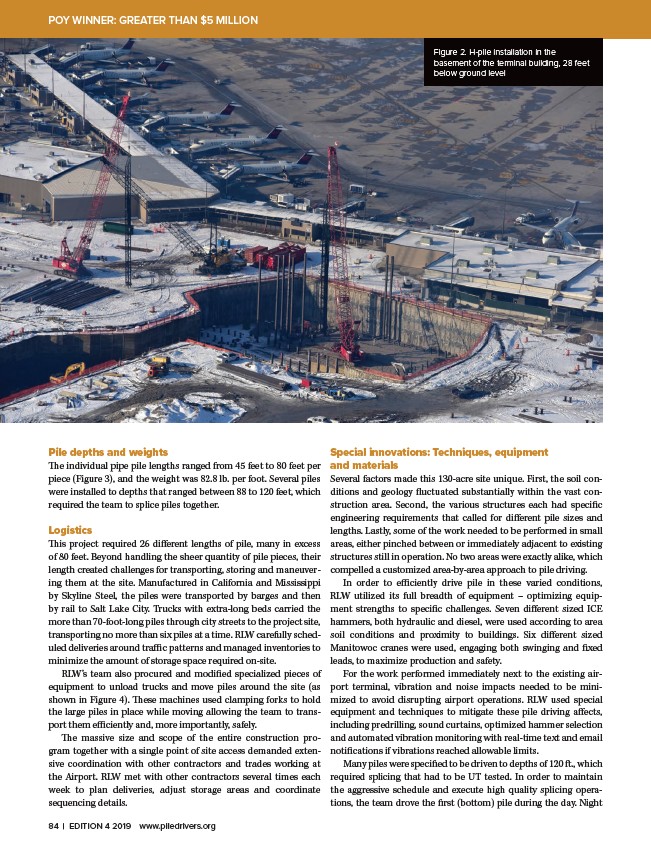
Figure 2. H-pile installation in the
basement of the terminal building, 28 feet
below ground level
84 | EDITION 4 2019 www.piledrivers.org
/www.piledrivers.org